Showing posts with label Polley. Show all posts

Monday, March 5, 2012

Sunset Boulevard (1950)

Sunset Boulevard (1950)
Directed by: Billy Wilder
Written by: Charles Brackett, Billy Wilder, & D.M. Marshman, Jr.
Starring: William Holden & Gloria Swanson
Genre: Film Noir

Your assignment: First, post two comments (meaningful and including your initials) on other people's romance movie blog posts. Then, write a two-paragraph blog post about a movie you've seen outside of class that either features an unconventional detective/cop and/or a femme fatale (check your notes!).

Paragraph 1 should describe the plot of the film, including the characters, up until the inciting incident (no spoilers!). For instance: Sunset Boulevard follows Joe Gillis, an out-of-work screenwriter who tells us at the beginning of the film that he is dead and floating in a pool. Through an extended flashback, we watch him evade the police from repossessing his car to repay his debts and then ditch his car in what he thinks is an abandoned garage. It turns out, however, that the attached mansion is actually the residency of former silent film star Norma Desmond. When the two meet and Desmond finds out Gillis writes movies, she wants him to help her stage a comeback, as she has become a washed-up has-been ever since the film industry started working in sound and talking actors. What happens after the two join forces is an uncomfortable, twisted, and often dark tale of fame, strange love, and insanity.

Paragraph 2 should include your opinion of the film and answer the questions: How is the film dark and downbeat like film noir was when it first started out in the 1940s? Is the main character (the detective or the one who unravels the mystery) unconventional in a way that's entertaining and yet still believable? Is the female character a successful femme fatale, meaning does she lure both the viewer and the protagonist in only to turn out to be bad? Example: This movie is dark and downbeat in a much more subtle and unique way than your average film noir. Joe is not a gloomy detective or crooked cop, but both he and Norma show the underbelly of Hollywood for what it is - a merciless business in which the next best thing is always being sought after and many good souls get left behind. They're both essentially good people, but they're pushed to bizarre circumstances when neither of their lives are looking that great. Sure, from the beginning you see Norma as the much weirder of the two, but you never expect where the story is going or how much further Joe is going to let (or should let) Norma drag him into her isolated world of depression and delusion.

Thursday, April 21, 2011

Western/War Blog Post

Apocalypse Now (1979)
Genre: War
Directed by Francis Ford Coppolla
Written by John Milius & Francis Ford Coppolla
Starring: Martin Sheen & Marlon Brando

Instructions: Write a 2-paragraph blog post about a movie you've seen that fits either the Western or War genre. If you can't think of one, consider the five components of a Western (which also apply to most war movies) - wide open landscape, outlaws, law enforcers, a journey story, and characters escaping/chasing each other. Include the necessary film info (see above example for Apocalypse Now) along with a photo, what the film's about (without giving away too much!), who the film's major characters are, and a detailed description of both your opinion of the film and how it fits the components of a Western. Consider the vocab of the class and re-read your sentences before you publish! To get an idea of an A-grade blog post, read my example for Apocalypse Now below.

Captain Willard (played by Charlie Sheen's father, Martin) already seems highly affected by the terrors of the Vietnam War before he's sent out on a mission to kill the rogue traitor Colonel Kurtz, creepily portrayed by Marlon Brandon, who is most famous for being the Don Corleone in The Godfather. Along the way we see some very surreal and strange images of the East-Asian landscape, including a very memorable appearance by Robert Duvall as a maniac lieutenant who loves surfing and "the smell of napalm in the morning." Though some parts of the film are funny, the platoon suffers many attacks and psychological traumas throughout, and we get to see the true horrors of forcing men on a crusade of death.

As Willard and his crew travel down the Nung River, we the viewer get to see areas of Vietnam and Cambodia as both breathtakingly beautiful and downright savage. The landscape of the film is arguably its most vivid aspect, with everything from the wet outset of the jungle to the ominous haze of fog captured through expert cinematography and camera work. This is just one example of how the film helps us understand the dual nature of war, and war movies in general - that even though it seems like an atrocious experience to go through, to the point of potentially committing atrocious acts yourself, we always hope the law enforcer (or the U.S. soldier) will win over the foreign enemy.

Thursday, March 3, 2011

Film Noir/Femme Fatale Blog Post

The Maltese Falcon (1941)
Writer/Director: John Huston
Starring: Humphrey Bogart & Mary Astor
Genre: Film Noir

Your assignment: Write a 2-paragraph blog post about a movie you've seen outside of class that you would consider similar to Film Noir (detective/cop film or murder mystery) and/or that includes a femme fatale (dangerous/manipulative female) character. Explain what it's about (without spoiling!) and your opinion of it. Did it do a good job of presenting a dark and dreary setting or tone? Explain how/how not. Did the plot keep you guessing until the end? Explain how/how not. If there was a femme fatale, did the actress do a good job of presenting her as appealing and seductive and then later as evil and horrifying? Explain how/how not.

Paragraph 1 should describe the plot of the film, including the characters, up until the inciting incident (no spoilers!). For instance: The Maltese Falcon follows private investigator Sam Spade (Humphrey Bogart) on a number of mysterious adventures, starting with a suspicious new client named Ms. Wonderly who hires Spade and his partner, Miles Archer, to find out about the man her sister has gotten involved with. When Archer begins the investigation and turns up dead, the grumpy yet charismatic Spade attempts to seek out the truth. But when a series of other shadowy figures interrupt him at every turn and may or may not be involved in his partner's death, trying to get his help in obtaining a prized lost treasure called The Maltese Falcon, Spade has to be careful how far he treads.

Paragraph 2 should include your opinion of the film and answers to the questions above. For instance: Classic film noir lighting helps set the tone of The Maltese Falcon, which is largely set indoors, so when shadows fill up a character's face or a room, it helps to add to the suspense of the mystery at hand. This, in addition to the constant twists and turns of the story, which can't be revealed here for sake of spoiling, make for a moody and witty dialogue-driven film where every conversation keeps you guessing until the end about who's being truthful and who's being deceitful. The character that is the most unassuming at first, however, also turns out to be the film's greatest villain at the end. The femme fatale is a common element of the male-centric crime film, but is also something that started with this, the original film noir that took expectations of the sweet and innocent and flipped them on their heads, making for an exciting and unpredictable tale.

Thursday, February 17, 2011

Citizen Kane (1941)

Citizen Kane (1941)
Directed by: Orson Welles
Written by: Herman J. Mankiewicz & Orson Welles
Starring: Orson Welles & Joseph Cotten
Genre: Biopic

Your assignment: First, post three comments (meaningful and including your initials) on other people's romance movie blog posts. Then, write a two-paragraph blog post about a movie you've seen outside of class that is based on the life of a real person and/or real events.

Paragraph 1 should describe the plot of the film, including the characters, up until the inciting incident (no spoilers!). For instance: Citizen Kane tells the story of wealthy businessman Charles Foster Kane, based on the true life rise and fall of William Randolph Hearst, a newspaper tycoon from the 1930s. When a group of journalists find out Kane's last word before he died was "Rosebud", they set out to find what it means, and this is how we're told about the main character's life: through interviews with friends and co-workers. Then, using flashbacks and flash-forwards, we get to see how Kane grew up, became wealthy, ran for office, and broke the hearts of more than a couple women and colleagues.

Paragraph 2 should include your opinion of the film and answer the questions: Did it do a good job of turning real life into an entertaining and meaningful story? How or how not? What insight was given about that person's life or the event's impact on people? What was universal about it? For instance: I think Citizen Kane has been named one of the most important and best movies of all time because of the way it portrays someone who attains power without knowing properly how to use it. Reportedly William Randolph Hearst tried to stop this film's release; no one knows why for sure but one can guess it probably cut too close to home. It turns a story about a bloated old rich white guy into something I think everyone can relate to, which is that no one really knows how to wield power when they have it. This corruption can lead to hurting those you love because your ego becomes so huge. Kane unfortunately didn't realize this until it was too late and all he had left at the end was his memory of the sled "Rosebud", an object from the childhood he can never go back to and start all over again from.

P.S. Don't forget a title, picture, initials in the 'Labels' section, and all the necessary film info (year, director, writer, stars, and genre) from imdb.com.

Thursday, February 3, 2011

Romance & Relationships in the Movies

Eternal Sunshine of the Spotless Mind (2004)
Directed by: Michel Gondry
Written by: Charlie Kaufman
Starring: Jim Carrey & Kate Winslet
Genre: Romance

Your assignment: Blog about a movie you have seen where the romance OR relationship between two characters was realistic. See blogging requirements below.

When writing a blog post, include a picture and the info (which you can get from imdb.com) you see above at the top. Then, you are required to 1) write a brief introductory paragraph describing the plot of the movie. Like this: Joel is still very much in love with his ex-girlfriend Clementine, but when he finds out she's had all memory of him erased from her brain by a strange medical service, he wants to do the same back. When he has the procedure done, however, he finds that he doesn't want to lose the memory of the love of his life.

In a brief second paragraph, describe 2) what made the romance and/or relationship between characters realistic. Like this: Even though Eternal Sunshine... has a weird sci-fi premise, where we live in a world where you can erase all memories of a specific person, the relationship between Joel and Clementine is definitely genuine. Director Michel Gondry shows us both glimpses of when they fight (Joel hates when Clementine "gets drunk and stupid" at dinner) and when they play lovey dovey games together (one pretends to smother the other in bed with a pillow only to surprise and tickle shortly after). These kinds of details are vital in expressing the wide spectrum of emotions someone feels when they're truly in love.

Thursday, March 11, 2010

The Maltese Falcon (1941)

Director: John Huston

Same deal, folks. For this week's post, review a film that The Maltese Falcon reminded you of, either the way it looked (think lighting!) or the plot (think detectives! femme fatales!). You can check my last post for instructions on how to write a film review or you can just hop right to it. Use imdb.com to look up your film's director, screenwriter, and/or actors. Click 'Sign In' and then 'New Post' once you log in. Don't forget: commenting on your classmates' posts is extra credit! 5 points per detailed/insightful comment! Here's my 4-paragraph review of The Maltese Falcon as an example:

Humphrey Bogart stars as detective Sam Spade in the classic film noir The Maltese Falcon, a story about a mysterious missing statue, but also more so about deceit and betrayal. The movie kicks off when the attractive Ruth Wonderly, played by Mary Astor, arrives at Spade's office asking him and his partner Miles to find her missing sister, who she thinks has run off with a creep called Thursby. But of course this damsel in distress can't be telling the whole truth!

Bogart is probably better known for his infamous role as Rick Blaine in the classic romance Casablanca, but his experience as a sly detective in movies didn't end with The Maltese Falcon. He famously played another hard-nosed investigator in the unforgettable noir The Big Sleep in 1946. Clearly, the man has a talent for playing a good guy with a dark side.

The Maltese Falcon is one of the best film noirs of all time, if not the best, largely because of its shadow-enhanced lighting style that ended up populating many pulpy crime thrillers for years to come. By often using only a key light, and no fill light, the black and white cinematography is radiant and spooky, showing how easy it is to set a mood with a couple simple filmmaking tricks.

So obviously I would recommend this movie, but to who? Well you need to like mysteries and plot twists, because this movie's got plenty, but also I really do think anyone who can appreciate the art of photography would like Falcon. It really has a lot of impressive camera shots in addition to a suspenseful story!

Thursday, March 4, 2010

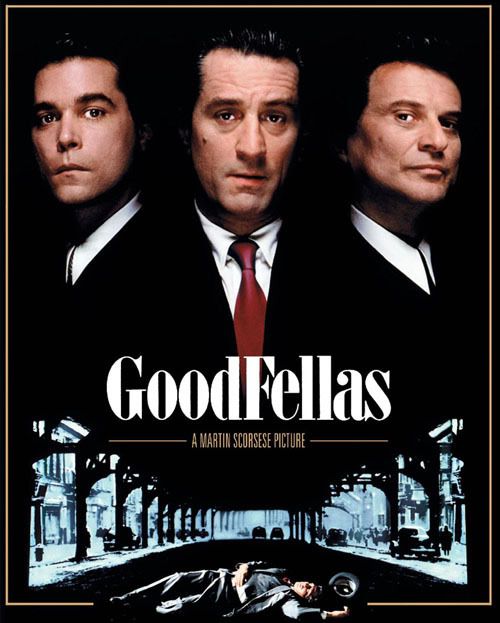
GoodFellas (1990)

Director: Martin Scorsese

For your blog post on a movie that GoodFellas reminds you of, write a film review based on the four parts mentioned in class:

1) PLOT TEASE...describe the inciting incident (what kick starts the events of the film) and main characters of the film (identifying which actor plays who).

2) CAST AND CREW BACKTRACK...describe what people might know 1-2 actors/screenwriters/directors from and how the film differs from their previous work (look up this info on IMDb.com if you need to).

3) OPINION FOCUS...without giving away twists or endings, offer a specific opinion you have on the film, based on a vocab word you haven't used in a post yet. (EXAMPLE FOR THIS WEEK: did the actors use method acting or the alienation effect and how did this affect how much you liked/disliked the film?)

4) FINAL THOUGHT...ultimately, would you recommend this film and why or why not? Does it remind you of the film we watched in class? How or how not?

!!!DON'T FORGET!!!

TITLE = Your Film (Year It Was Released)
PICTURE = Your Film's Poster + Director Listed Underneath
INITIALS = Your initials in the 'Labels' section

EXTRA CREDIT: comments on other classmates' posts offering your opinion on the film they blogged about (5 points per detailed insightful comment)

Tuesday, February 23, 2010

Citizen Kane (1941)

Director: Orson Welles

What film does Citizen Kane remind you of and why? Is your film also based on a real person or true events? If so, explain who/what. Do you think your film had a high degree of verisimilitude? Explain why or why not. Finally, google and read info about your film's preproduction, production, and/or post-production and share an interesting piece of information you learn. Take a look at the director's previous films and read about them. Why do you think they were chosen as director of your film? What about the actors? Editor? Use IMDb.com as a resource!

Your blog post should include 1) the name of the film and its year as the title, 2) a picture/poster of the film, 3) the director of the film, 4) a comparison to Citizen Kane, and 5) inclusion of a vocab word from the past week in your description/explanation/review of the film. Don't forget to put your initials in the 'Labels' section of your post!

Part of your 40-point grade also comes from leaving comments on other people's posts. Leave two comments (don't forget your initials) that include your opinion on the movie they blogged about and/or what film the one they blogged about reminds you of and why.

Wednesday, February 10, 2010

The Graduate (1967)


This week's genre: Comedy

This week's vocab:
Editing, Mise-en-Scène, Cinematography, and Inciting Incident

What movie did The Graduate make you think of and why? Include discussion of both GENRE and a VOCAB word of your choice when comparing the two films. Title your post with the name and year of the film you're focusing on, include a picture of said film, and put your initials in the "Labels" section of your post. Need to find out what year your movie came out in or who wrote/directed it? Search for your film at IMDb.com!

Wednesday, February 3, 2010

Eternal Sunshine of the Spotless Mind (2004)


Okay, you've heard me rave about Eternal Sunshine... and now you've seen it. What film studies connections can you make? In your first blog post, tell me about a movie that Eternal Sunshine... reminded you of and how. Include a picture and make sure you put the name of the film (and year) as your post's title. In your paragraph, make a connection to either one of the week's vocab words and/or the genre of film we're focusing on: director, screenwriter, producer, production designer, or romance. Read the paragraph below for an example reaction from yours truly.

Wow. Michel Gondry, the director of
Eternal Sunshine..., really knocked me out of my seat. His vision of the main character Joel's dreamworld was wild and fun, but also realistic how many of his memories were connected and he'd often jump from one to the next. In fact, the only other romance movie I can think of with such a strange yet enjoyable vibe to it is Tim Burton's Edward Scissorhands, which I just watched again recently. If you haven't seen it, check it out, because it literally is about a guy with scissors with hands, played by Johnny Depp, who falls in love with a girl. The world that Burton creates in that movie is just as crazy and unique as Gondry's in Eternal Sunshine of the Spotless Mind, but it's also a little darker, and fits a lot more into the fantasy genre. Both are great examples of one-of-a-kind love stories though!